
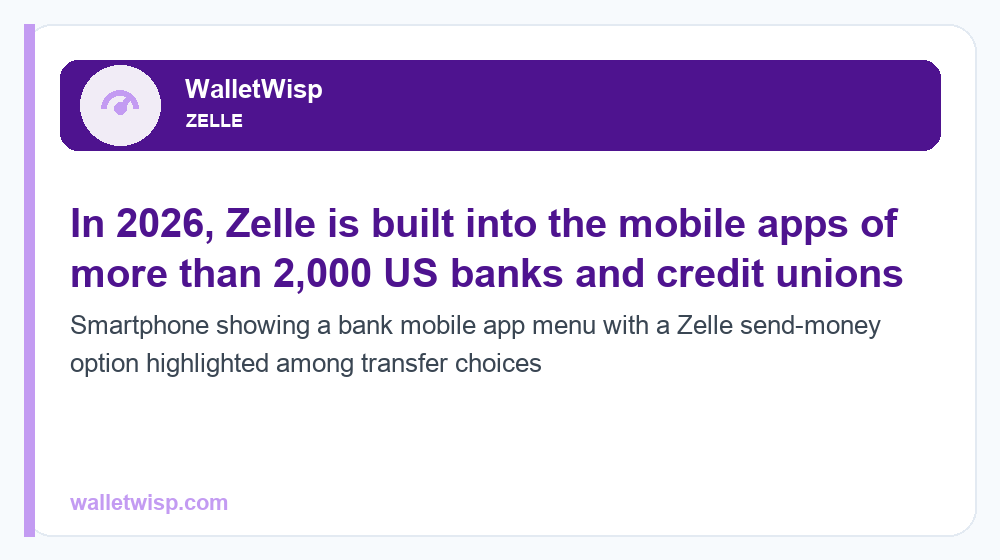
What banks use Zelle? In 2026, more than 2,000 US banks and credit unions have Zelle built directly into their mobile banking app and online banking, and it is free at essentially all of them. That includes every major national bank — Chase, Bank of America, Wells Fargo, Citi, U.S. Bank, PNC, Capital One, TD Bank, Truist, Navy Federal and hundreds of regional banks and local credit unions. If your bank is part of the network, Zelle simply appears inside your existing banking app; there is no separate account, subscription or standard transfer fee to send or receive money.
The key change to know: the standalone Zelle app was discontinued in 2025. Zelle now works only through participating banks’ and credit unions’ own apps. So the practical question of what banks use Zelle matters more than ever — if your financial institution is not in the network, you generally cannot use Zelle at all anymore.
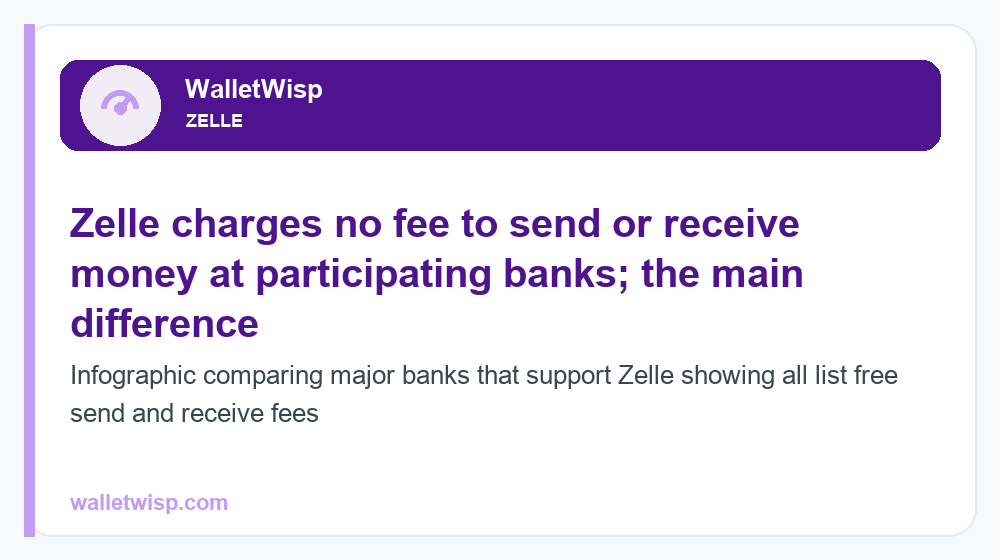
Which major banks have Zelle in 2026?
Zelle is owned and operated by Early Warning Services, a company jointly held by seven of the largest US banks. Because of that ownership structure, every big national bank offers Zelle inside its app, typically with instant transfers between enrolled users. Here is a snapshot of the largest supported institutions and where you’ll find Zelle in each one.
| Bank / Credit Union | Zelle available? | Where to find it | Cost to send/receive |
|---|---|---|---|
| Chase | Yes | Chase Mobile app → “Pay & Transfer” → Zelle | Free |
| Bank of America | Yes | BofA app → “Send money with Zelle” | Free |
| Wells Fargo | Yes | Wells Fargo Mobile → “Pay & Transfer” → Zelle | Free |
| Citibank | Yes | Citi Mobile → “Pay & Transfer” → Zelle | Free |
| U.S. Bank | Yes | U.S. Bank app → “Send Money” → Zelle | Free |
| PNC Bank | Yes | PNC app → “Move Money” → Zelle | Free |
| Capital One | Yes | Capital One app → “Send & Receive with Zelle” | Free |
| TD Bank | Yes | TD app → “Send Money with Zelle” | Free |
| Truist | Yes | Truist app → “Zelle” | Free |
| Navy Federal Credit Union | Yes | Navy Federal app → “Send Money” → Zelle | Free |
| USAA | Yes | USAA app → “Send Money with Zelle” | Free |
| Ally Bank | Yes | Ally app → “Zelle” | Free |
This is only a fraction of the network. Beyond these household names, thousands of mid-size regional banks (Regions, Fifth Third, KeyBank, Citizens, Huntington, M&T, Ally, BMO, Comerica and many more) and local community banks and credit unions also support Zelle. For a deeper look at two of the most-searched institutions, see our guides on whether Chase has Zelle and whether Wells Fargo has Zelle.
How many banks use Zelle?
As of 2026, the Zelle network spans more than 2,200 participating banks and credit unions in the United States. The network has grown steadily since Zelle launched in 2017, and today it reaches the large majority of US checking-account holders. In practice, if you bank with any nationally known institution — and most regional and community ones — Zelle is already available to you.
What the network does not cover well are some fully online-only fintech accounts, certain business-only banks, prepaid cards, and a minority of very small institutions that never joined. Because the standalone app is gone, those customers no longer have a workaround and must use a different payment method entirely.
Is Zelle free at every bank?
Yes — Zelle itself does not charge a fee to send or receive money, and participating banks are not permitted to charge a standard fee for standard Zelle transfers. Whether you’re at a giant like Chase or a small local credit union, sending $20 or $2,000 through Zelle costs the same: nothing. Money typically moves in minutes when both people are enrolled.
There are a few narrow exceptions worth understanding so “free” doesn’t surprise you:
- Overdraft or insufficient-funds fees. Zelle pulls straight from your checking account. If a payment overdraws the account, your bank’s normal overdraft fee can still apply — that’s a bank policy, not a Zelle charge.
- Business or high-volume tiers. Zelle for small business is free at most banks, but a small number of institutions apply a per-transaction fee to business accounts. Check your business account’s fee schedule.
- Foreign / correspondent bank fees. Zelle is a US-only, US-dollar service between US bank accounts. It is not designed for international transfers, so it won’t carry the currency-conversion costs of a cross-border wire — but it also can’t send money abroad.
Bottom line: for everyday person-to-person payments between US bank accounts, Zelle is free at essentially every bank that offers it. The variable that changes bank to bank isn’t price — it’s your daily and monthly sending limits, which each institution sets on its own.
How to check if your bank supports Zelle
There are three reliable ways to confirm whether your bank uses Zelle, and each takes under a minute.
1. Look inside your banking app
Open your bank’s mobile app or log into online banking and look for a menu labeled “Send Money,” “Pay & Transfer,” “Move Money,” or “Zelle” directly. If Zelle appears, your bank is in the network and you can enroll right there using your email address or US mobile number.
2. Search the official Zelle bank list
Go to zellepay.com and use the “Find Your Bank” tool. Type your bank or credit union’s name; if it appears in the results, it participates. If it does not appear, your institution is not currently in the network.
3. Ask your bank directly
Call the number on the back of your debit card or check your bank’s help center. Because Zelle is now delivered only through banks, customer service can tell you immediately whether it’s enabled on your account type.
| Method | Best for | Time | What it tells you |
|---|---|---|---|
| Check your banking app | Confirming and enrolling in one step | ~30 seconds | Whether Zelle is live on your specific account |
| zellepay.com “Find Your Bank” | Checking before you switch banks | ~1 minute | Whether the institution participates at all |
| Call your bank | Business accounts or edge cases | 2–5 minutes | Account-type eligibility and any limits |
What if your bank is NOT in the Zelle network?
Because the standalone Zelle app was retired in 2025, there is no longer a way to use Zelle without a participating bank. If your institution isn’t in the network, you have a few practical options:
- Open an account at a Zelle-participating bank. Many people keep a free checking account at a major bank (Chase, Capital One 360, Ally and others carry no monthly fee with basic requirements) specifically so they can send and receive Zelle payments.
- Use a different peer-to-peer app. Venmo, Cash App, PayPal and Apple Cash all move money between individuals. They aren’t bank-to-bank like Zelle, and instant cash-outs may carry a small fee, but they work regardless of which bank you use.
- Ask the sender to switch methods. If someone is trying to pay you via Zelle and your bank doesn’t support it, they can send through another app or by standard bank transfer instead.
One caution: if a “Zelle app” appears in an app store today, treat it with suspicion. The legitimate consumer app no longer exists, and scammers have used fake Zelle apps and impersonation texts to steal money. Only ever access Zelle through your own bank’s official app.
Why Zelle vs. Venmo or Cash App comes down to your bank
The biggest structural difference is where the money lives. Zelle moves funds directly between two US bank accounts, so there’s no wallet balance to cash out and, when both sides are enrolled, money usually lands in minutes. Venmo and Cash App hold a balance inside the app that you then transfer to your bank — instantly for a small fee, or free in 1–3 business days.
That design is exactly why what banks use Zelle is the deciding question. Zelle only works if both people bank somewhere in the network. Given that 2,000-plus institutions participate, that’s usually a safe bet — but always worth a quick check before you promise to “just Zelle it.”
Frequently Asked Questions
What banks use Zelle in 2026?
More than 2,000 US banks and credit unions use Zelle in 2026, including Chase, Bank of America, Wells Fargo, Citi, U.S. Bank, PNC, Capital One, TD Bank, Truist, USAA, Ally and Navy Federal, plus thousands of regional banks and local credit unions. Zelle appears inside each bank’s own app.
Is Zelle free at all banks?
Yes. Zelle does not charge to send or receive money, and participating banks cannot apply a standard fee to standard Zelle transfers. The only related costs are things like your bank’s own overdraft fee or, at a few institutions, a business-account fee — never a charge from Zelle for a normal personal payment.
How do I know if my bank has Zelle?
Open your bank’s mobile app and look for “Send Money,” “Pay & Transfer,” or a Zelle menu. You can also use the “Find Your Bank” tool at zellepay.com, or call the number on your debit card. Any of these confirms whether Zelle is enabled on your account.
Can I use Zelle if my bank isn’t a member?
Generally no. The standalone Zelle app was discontinued in 2025, so Zelle now works only through participating banks’ apps. If your bank isn’t in the network, you’d need to open an account at a participating bank or use another app such as Venmo, Cash App or PayPal instead.
Do both people need the same bank to use Zelle?
No. You and the person you’re paying can bank at completely different institutions. You only both need to bank somewhere within the Zelle network. When both parties are enrolled, transfers between different banks still typically arrive in minutes.
Does Chase, Wells Fargo, or Bank of America charge for Zelle?
No. Chase, Wells Fargo, Bank of America and every other major bank offer Zelle free for standard personal transfers. What differs between them is the daily and monthly sending limit each bank sets, not the price of using the service.
Why was the standalone Zelle app discontinued?
The vast majority of Zelle activity — roughly nine in ten transactions — already happened inside banks’ own apps, so Zelle retired its separate consumer app in 2025 to focus entirely on bank-integrated service. For most users nothing changed, since they were already using Zelle through their bank.
Is Zelle safe to use?
Zelle is safe for sending money to people you know and trust, and it’s protected by your bank’s security. However, Zelle payments are instant and generally cannot be reversed, so treat it like handing over cash — only send to people you know, and never in response to unexpected requests, prize claims, or “verify your account” messages, which are common scams.