
No, Zelle does not report your transactions to the IRS and will not send you a 1099-K form. Unlike apps such as Venmo, Cash App, and PayPal, Zelle is a bank-to-bank messaging network that moves money directly between checking accounts without ever holding your funds. Because it is not a “third-party settlement organization” that settles payments, it falls outside the IRS 1099-K reporting rules entirely. So when people ask does Zelle report to IRS, the short answer is clear: no form is issued. The longer answer matters more, though — the absence of a tax form does not mean the money is tax-free. If you receive taxable income through Zelle, you are still legally required to report it.
This is one of the most misunderstood topics in personal finance right now, largely because the 1099-K rules for other payment apps have been shifting for several years. Let’s break down exactly why Zelle is different, what the IRS actually expects from you, and how to keep clean records so you are never caught off guard at tax time.
Why Zelle does not report to the IRS
The reason comes down to plumbing. Most payment apps hold your money in a digital wallet or account balance before you cash out to a bank. That intermediate step makes them “third-party settlement organizations” (TPSOs) under the tax code, which triggers 1099-K reporting obligations once a user crosses certain thresholds.
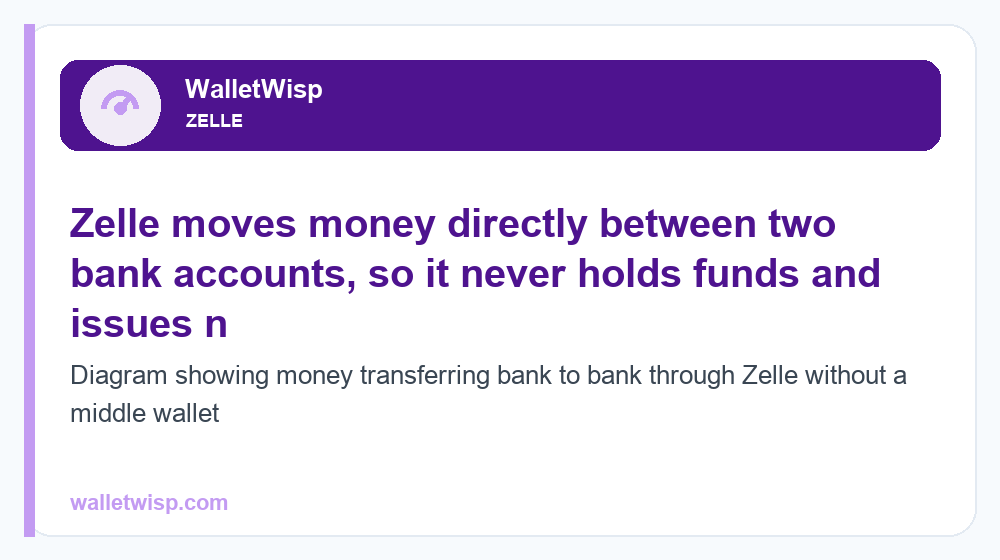
Zelle works differently. It is owned by Early Warning Services, a company created by several of the largest U.S. banks, and it functions as a secure messaging layer that tells one bank to push money straight to another bank. The funds move from your account to the recipient’s account without pausing in a Zelle-controlled wallet. Because Zelle never settles or holds the payment, it does not meet the legal definition of a TPSO, and federal law specifically exempts this type of network from 1099-K filing.
Zelle has stated this position publicly and consistently: it does not report transactions to the IRS. Note also that the standalone Zelle app was discontinued in 2025, so most people now use Zelle directly inside their bank’s mobile app or website. That change does not affect the tax picture — sending or receiving through your bank’s built-in Zelle feature carries the same no-1099-K treatment.
If you want to understand the mechanics and security side of the service more deeply, our guide on whether Zelle is safe to use covers how the bank-to-bank model protects your account.
No 1099-K does not mean no taxes
This is the part that trips people up, so read it twice: the tax form and the tax obligation are two separate things. A 1099-K is just an information return that helps the IRS cross-check what taxpayers report. The legal duty to report taxable income exists whether or not any form is ever generated.
Here is the distinction that actually matters for your return:
- Personal transfers are not taxable. Splitting rent, paying back a friend for concert tickets, chipping in for a group dinner, or receiving a gift from a family member are not income. Nobody owes tax on these, on Zelle or anywhere else.
- Business and self-employment income is taxable. If you are a freelancer, run a side hustle, sell goods or services, or collect rent as a landlord, money you receive for that work is taxable income — even if it lands in your account via Zelle and even though no 1099-K arrives.
In other words, using Zelle does not create a tax loophole. A graphic designer who invoices a client and gets paid $4,000 through Zelle owes the same tax as one paid by check or by Venmo. The IRS treats the income identically; only the paperwork differs. Deliberately routing business income through Zelle to dodge a 1099-K and then failing to report it is tax evasion, not a clever strategy.
Zelle vs. Venmo, Cash App, and PayPal on 1099-K
The clearest way to see why Zelle stands apart is to compare it side by side with the apps that do issue 1099-K forms. The table below reflects the general framework; specific dollar thresholds for the other apps have been changing and are set by federal law, so always confirm the current year’s figure with the IRS or a tax professional.
| Payment app | Holds your funds? | Issues a 1099-K? | What triggers reporting |
|---|---|---|---|
| Zelle | No — bank to bank | No | Not applicable (exempt network) |
| Venmo | Yes — wallet balance | Yes | Goods & services over the annual federal threshold |
| Cash App | Yes — wallet balance | Yes | Business/goods & services over the threshold |
| PayPal | Yes — wallet balance | Yes | Goods & services over the threshold |
For a deeper look at how the wallet-based apps handle this, see our companion article on whether Venmo reports to the IRS, which walks through the changing thresholds and the goods-and-services versus friends-and-family distinction in detail.
A note on the shifting 1099-K threshold
For years, the 1099-K threshold for apps like Venmo and PayPal was set high — reporting only kicked in after more than $20,000 and 200 transactions. Legislation lowered that dramatically, and the IRS has phased in reduced thresholds over multiple tax years, causing a lot of confusion and last-minute changes. The important takeaway for Zelle users: none of this applies to you, because Zelle is exempt regardless of what the threshold happens to be in any given year.
Who should pay the closest attention
Everyone who receives taxable money through Zelle should track it, but a few groups face the most real-world risk of getting this wrong:
- Freelancers and gig workers who ask clients to pay via Zelle to avoid processing fees. No 1099-K will arrive to remind you — the responsibility to track and report is entirely on you.
- Small business owners and sole proprietors who use a personal or business bank account’s Zelle feature for customer payments.
- Side hustlers selling handmade goods, tutoring, cleaning, lawn care, reselling, or offering any paid service to individuals.
- Landlords collecting rent through Zelle, which is taxable rental income.
If you are in any of these groups, treat every business payment as reportable from the moment it hits your account. Also keep in mind that banks apply their own sending and receiving caps, and Zelle limits are set by each institution rather than by Zelle itself — you can review how those Zelle transfer limits typically work if large payments are part of your business.
Record-keeping tips so you are never caught off guard
Because Zelle gives you no year-end tax form, good records are your safety net. If the IRS ever questions your return, you want to be able to show exactly which deposits were income and which were personal. Here is a simple system that works:
- Separate business from personal. The single best move is to run business Zelle payments through a dedicated business bank account, kept apart from the account you use to split dinner with friends.
- Log income as it arrives. Keep a spreadsheet or use accounting software to record the date, payer, amount, and purpose of every business payment. Reconcile it monthly, not in April.
- Save context for personal transfers. For reimbursements and gifts, a quick note or the memo/message field showing the payment was personal helps document that it was not income.
- Keep invoices and receipts. Match each incoming payment to an invoice, and hold onto receipts for deductible business expenses so you can offset your income legitimately.
- Set aside money for taxes. Since no tax is withheld on Zelle payments, self-employed people should reserve a portion of each payment and consider quarterly estimated taxes to avoid a large bill and penalties.
- Retain records for several years. The IRS generally recommends keeping tax records for at least three years, and longer in some situations.
Not tax advice: This article is general information for educational purposes only and does not constitute tax, legal, or accounting advice. Tax rules change and individual situations vary. Consult a qualified CPA or tax professional about your specific circumstances before making decisions.
Frequently asked questions
Does Zelle report to the IRS at all?
No. Zelle does not report transactions to the IRS and does not issue 1099-K forms, because it is a bank-to-bank network that never holds your funds and is therefore exempt from third-party payment reporting rules.
Do I still owe taxes on money I receive through Zelle?
If the money is taxable income — payment for freelance work, a business, goods, services, or rent — then yes, you must report it and pay tax on it, regardless of the lack of a 1099-K. Personal gifts and reimbursements between friends and family are not taxable.
Will I get a 1099-K from Zelle if I receive a lot of money?
No. There is no dollar amount or transaction count that causes Zelle to send a 1099-K, because the network is exempt from the reporting requirement entirely. The threshold changes you may have heard about apply to apps like Venmo, PayPal, and Cash App, not Zelle.
Is receiving money on Zelle from a friend taxable?
No. Money a friend sends you to split a bill, repay a loan, or cover a shared expense is not income and is not taxable. Only payments that represent taxable income need to be reported.
Can I use Zelle to avoid paying taxes on my side hustle?
No. Using Zelle to sidestep a 1099-K and then not reporting the income is tax evasion. The income is taxable no matter how you are paid, and the IRS can pursue unreported income even when no form was filed.
How is Zelle different from Venmo for taxes?
Venmo holds funds in a wallet balance, which makes it a third-party settlement organization required to issue 1099-K forms once goods-and-services payments cross the federal threshold. Zelle moves money directly between banks, holds nothing, and issues no form.
How should freelancers track Zelle income?
Route business payments through a separate business account, log each payment’s date, payer, amount, and purpose, match payments to invoices, and set aside money for estimated quarterly taxes. Since no form arrives, your own records are the documentation the IRS will rely on.
Did the discontinued Zelle app change any of this?
No. The standalone Zelle app was discontinued in 2025, and most people now use Zelle inside their bank’s app or website. The tax treatment is unchanged — no 1099-K is issued either way.
Bottom line
So, does Zelle report to IRS? No — Zelle sends no 1099-K because it is an exempt bank-to-bank network rather than a fund-holding payment processor like Venmo, Cash App, or PayPal. But that convenience comes with a responsibility: the absence of a form does not erase your legal duty to report taxable income. Personal gifts and reimbursements stay tax-free, while business, freelance, and side-hustle earnings are fully reportable whether or not any paperwork is generated. Keep business and personal money separate, log every payment, set aside cash for taxes, and when in doubt, talk to a tax professional. Do that, and Zelle’s lack of reporting becomes a small paperwork advantage rather than a compliance trap.