Splitting a dinner bill, paying back a friend, or collecting money for a group gift usually means digging up someone’s email, phone number, or PayPal username first. PayPal Links removes that step. You create a single, one-time link inside the PayPal app, drop it into any text, DM, or email, and the other person taps it to send or receive the money—no account details exchanged in advance.
PayPal rolled the feature out to U.S. users in September 2025, with expansion to the UK, Italy, and other markets, plus cryptocurrency support on the way. Here’s exactly how it works.
What Are PayPal Links?
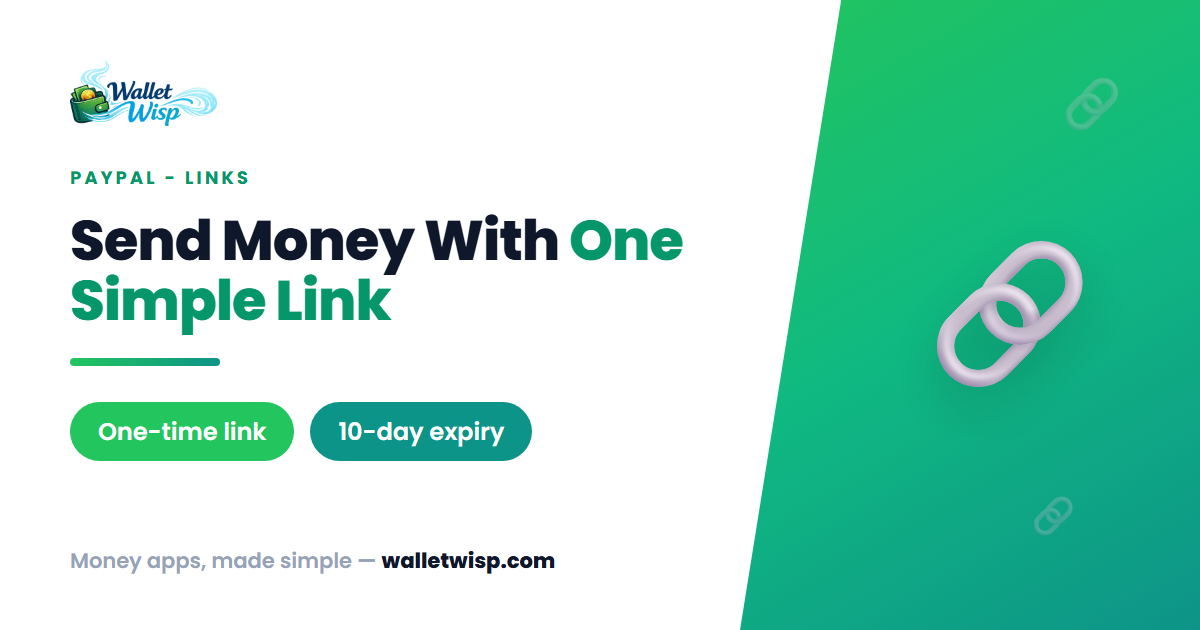
A PayPal Link is a personalized, one-time web link tied to a specific transaction. Instead of pushing money to a contact you’ve already saved, you generate a link for a set amount and share it however you like. The person who opens it completes the transaction on PayPal’s side.
Two things make Links different from a standard PayPal transfer:
- No recipient info required up front. You don’t need the other person’s email, phone number, or PayPal handle to create the link—you just need a way to send them the link itself.
- It’s single-use. Each link can be accepted or paid once by one person, then it’s done. It can’t be forwarded and reused by a crowd.
Send Money vs. Request Money
A single link can work in either direction, and you choose which when you create it:
- Send money: You’ve already paid the amount, and the link delivers it. Whoever claims it receives the funds into their PayPal account.
- Request money: The link asks the other person to pay you a set amount. When they open it and complete payment, the money lands in your PayPal balance.
How to create a PayPal Link
- Open the PayPal app and tap Send/Request.
- Choose Send and request money with a link.
- Enter the amount and, optionally, a short note (e.g., “Taco night 🌮”).
- Pick whether you’re sending or requesting, and (for sending) choose your payment method.
- Review the details and generate the link.
- Share it via text, direct message, email, or chat.
The recipient will need to log in to (or open) a PayPal account to complete the transaction—the link is the introduction, but PayPal still handles the actual money movement securely.
The 10-Day Expiry, Cancels, and Refunds
This is where Links stand apart from a normal transfer, so it’s worth understanding the timeline clearly.
| Situation | What happens |
|---|---|
| Link is accepted or paid | Transaction completes; the link can’t be used again. |
| Link sits unclaimed for 10 days | It automatically expires. Any money you already paid—including fees—is refunded to your original payment method. |
| You cancel before it’s claimed | You get a full refund (money plus fees) to your original payment method. |
| Link is expired or canceled | It stops working for everyone and simply shows the payment is no longer available. |
You can only cancel a link while it’s still unclaimed—once someone has accepted or paid it, the transaction is locked in. If your recipient is slow, you can send a reminder rather than starting over.
Worked example
Say you send your roommate $60 for the internet bill using a PayPal Link on August 1. If they never open it, on August 11 the link expires and your $60 (plus any fee) bounces back to your bank account or card automatically. If they text back “wrong amount,” you cancel on August 2, get your $60 back the same way, and create a fresh link for the correct total. Nothing gets stuck in limbo.
What Do PayPal Links Cost?
Creating a link is free, and standard PayPal transaction fees apply when it’s used—so the cost depends on how money moves, not on the link itself.
| Type of payment | Typical U.S. fee (sender pays) |
|---|---|
| Personal payment (friends & family) funded by PayPal balance or linked bank | No fee |
| Personal payment funded by a credit or debit card | A percentage-based fee applies |
| Currency conversion / international transfer | Standard PayPal conversion spread added |
| Goods & services payments | Seller-side transaction fee applies |
Because fees are refunded when a link expires or is canceled, you’re never charged for a link that goes unused. Always confirm the exact fee shown in the app before you generate the link, since PayPal’s rates can change and vary by funding source and country.
Coming Soon: Crypto Support
PayPal has announced that U.S. users will be able to send and receive cryptocurrency through PayPal Links, not just dollars. The planned lineup includes:
- Bitcoin (BTC)
- Ethereum (ETH)
- PYUSD, PayPal’s own U.S. dollar–pegged stablecoin
The goal is to let you move crypto to a growing number of compatible wallets worldwide using the same simple link mechanism. Notably, PayPal has indicated that personal crypto transfers between friends and family—gifts and reimbursements—won’t trigger IRS 1099-K reporting the way business sales can. Crypto still carries price volatility and its own tax rules when you sell or convert, so treat it differently from sending plain cash.
Safety Tips for Using PayPal Links
- Only share links with people you trust. Don’t post a “send me money” link publicly—single-use or not, a payment link is best kept private.
- Use an encrypted channel (like an end-to-end encrypted messaging app) when possible, so the link can’t be intercepted.
- Double-check the amount and note before generating, then cancel and redo if anything’s wrong—it’s quick and fully refundable.
- Watch the clock. Remind your recipient before day 10 if you don’t want the link to expire.
Frequently Asked Questions
Do I need the recipient’s email or phone number to send a PayPal Link?
No. That’s the whole point—you generate the link without any of the recipient’s PayPal details. You only need a way to deliver the link to them, such as a text or DM. They’ll access or sign in to PayPal when they open it to complete the transaction.
What happens if no one claims my PayPal Link?
If the link isn’t accepted, paid, or canceled within 10 days, it expires automatically. Any money you already paid, including fees, is refunded to your original payment method. After that, the link stops working and shows that the payment is no longer available.
Can I cancel a PayPal Link after I’ve sent it?
Yes, as long as it hasn’t been accepted or paid yet. When you cancel, your money and any fees are returned to your original payment method. Once someone claims the link, it’s completed and can no longer be canceled.
Can more than one person use the same link?
No. A PayPal Link is one-time and single-use—it can be accepted or paid by just one person, once. If you need to collect from several people, you’ll create a separate link for each.
The Bottom Line
PayPal Links turn a payment into something as easy to share as a message. You skip hunting for someone’s contact info, you get a clear 10-day window with automatic refunds if nothing happens, and you can cancel anytime before the link is claimed. With crypto support (BTC, ETH, and PYUSD) on the horizon for U.S. users, the same one-tap link may soon carry more than just dollars. Just keep links private, share them over secure channels, and confirm any fee in the app before you send.
WalletWisp provides informational content only and does not offer financial advice. Fees, limits, availability, and features can change—always verify current details in the PayPal app or at paypal.com before making a transaction.