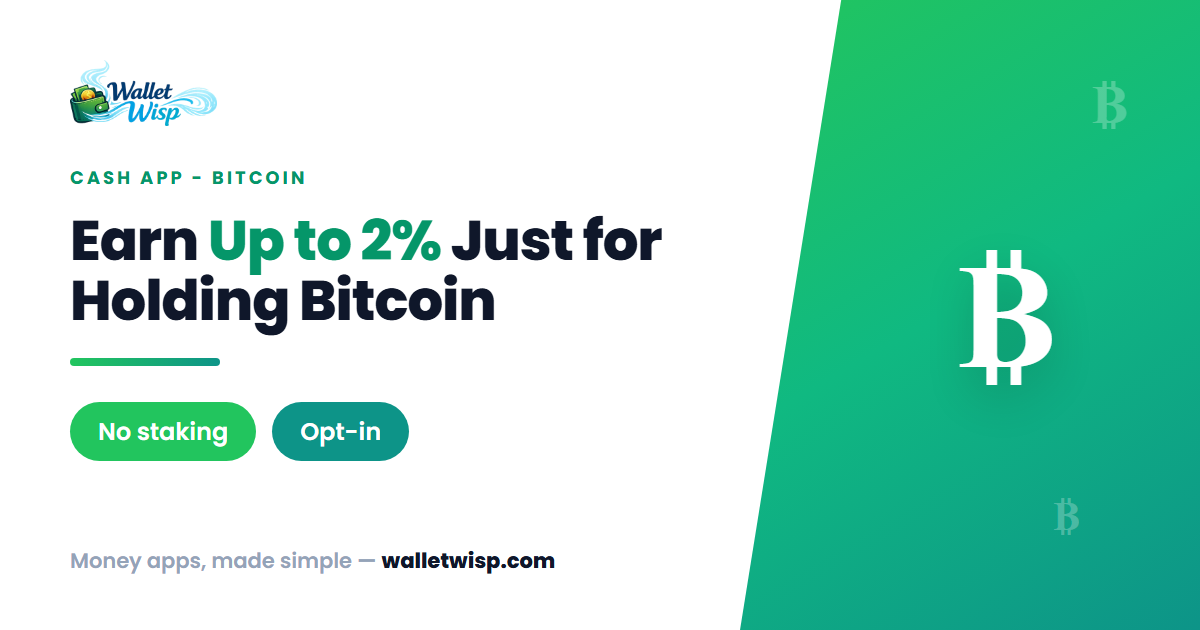
In late September 2026, Cash App quietly turned on a feature that got Block co-founder Jack Dorsey to post two words on X: “turn it on.” It’s called Bitcoin Bonus, and the pitch is simple — hold bitcoin inside Cash App, opt in, and the app pays you weekly rewards in bitcoin, worth up to 2% a year, with no lockup, no lending, and no staking.
That sounds almost too easy, and in some ways it is — there’s a real catch buried in the words “up to” and “paid in bitcoin.” Here’s exactly how the program works, how much you’d realistically earn, and what to watch out for before you flip the switch.
What Is Cash App’s Bitcoin Bonus?
Bitcoin Bonus is an opt-in rewards program built into the Cash App Bitcoin tab. Once you turn it on, Cash App pays you a reward based on the amount of bitcoin you hold in the app. According to Cash App’s own announcement, rewards are added weekly in sats (satoshis — the smallest unit of bitcoin) straight to your Activity feed.
The headline rate reported across coverage of the launch is up to 2% annually, paid in BTC. Crucially, Cash App stresses what it is not doing with your coins:
- No lockup — your bitcoin stays available to sell, send, or withdraw at any time.
- No lending — your bitcoin isn’t loaned out to third parties.
- No staking or moving your BTC — the rewards are funded directly by Cash App.
That last point matters. Many “earn yield on crypto” products in the past (think Celsius or BlockFi) generated returns by lending your coins out — which is exactly how customers lost money when those firms collapsed. Cash App is framing Bitcoin Bonus as a straight promotional reward tied to your balance, not a lending or staking scheme.
How to Turn On Bitcoin Bonus (Step by Step)
- Open Cash App and tap the Bitcoin tab (the ₿ icon).
- Look for the Bitcoin Bonus promotion and tap to opt in. You must opt in — it is not automatic.
- Hold eligible bitcoin in your Cash App balance.
- Watch your Activity feed — rewards arrive weekly in sats.
- You can turn it off anytime, and your bitcoin remains withdrawable throughout.
How Much Could You Actually Earn?
The rate is an annual figure paid out in weekly slices. At a full 2% a year, each weekly payment is roughly 2% ÷ 52 ≈ 0.038% of your balance per week. Here’s what that looks like at the maximum advertised rate:
| Bitcoin held in Cash App | Up to 2% / year (in BTC value) | Approx. weekly reward |
|---|---|---|
| $500 | ~$10 | ~$0.19 |
| $1,000 | ~$20 | ~$0.38 |
| $5,000 | ~$100 | ~$1.92 |
| $10,000 | ~$200 | ~$3.85 |
Worked example: Say you hold $5,000 of bitcoin and leave it untouched. At the top rate you’d collect around $1.92 worth of sats each week — roughly $100 of bitcoin over a year, in addition to any change in the price of the bitcoin you already own. The reward is paid in BTC, so you also accumulate slightly more bitcoin over time, which itself can rise or fall in value.
The Catch: What “Up to 2%” Really Means
This is where you need to read carefully. The program is genuinely free money in the sense that you’re not handing your coins to anyone — but several things keep it from being a guaranteed 2% savings account.
- “Up to” is a ceiling, not a promise. The 2% figure is a maximum. Coverage of the launch notes that eligibility, program terms, and other conditions can change the rate an individual actually receives. Your effective rate could be lower.
- Rewards are paid in bitcoin, so the dollar value moves. A 2% bitcoin reward means little if bitcoin’s price drops 10% that month. You’re earning more BTC, not more guaranteed dollars.
- It’s taxable. Reporting on the program confirms the bonuses are taxable. In the US, rewards received in crypto are generally treated as ordinary income at their fair-market value when you receive them, and you may owe capital gains later when you sell. Keep records.
- Cash App can change or cancel it. Cash App’s US Terms of Service state that promotional bitcoin bonuses are based on your eligible balance, require opt-in, and “may be rounded, limited, delayed, cancelled, or forfeited” at the company’s discretion.
- Your bitcoin sits in Cash App’s custody. To earn, the coins must be held in the app — not in self-custody (your own wallet). “Not your keys, not your coins” still applies. You’re trusting Block, Inc. to hold the bitcoin.
- Availability varies by location. Cash App has said its bitcoin services aren’t offered in every US state, and some bitcoin features (such as Lightning, Square Bitcoin, and Bitkey) are not available to New York residents. Check that Bitcoin Bonus is available where you live.
Bitcoin Bonus vs. Cash App’s Other Bitcoin Rewards
Don’t confuse Bitcoin Bonus (a holding reward) with Cash App’s separate spending and one-time promo offers. They can stack, but they’re different programs.
| Feature | What triggers it | Reward style |
|---|---|---|
| Bitcoin Bonus | Simply holding bitcoin after opting in | Up to 2%/yr, paid weekly in sats |
| Bitcoin Back (card/spending offers) | Making qualifying purchases | Percentage back in BTC, often capped monthly |
| One-time buy/referral bonuses | Buying BTC or referring a friend in a promo window | Flat $ amount in BTC |
Is It Worth Turning On?
If you already hold bitcoin in Cash App and plan to keep it there, Bitcoin Bonus is close to a no-brainer: you’re being paid extra bitcoin for something you were doing anyway, with no lockup and the ability to opt out at any time. The downside risk isn’t the reward itself — it’s the ordinary risk of holding bitcoin (price volatility) plus the custody trade-off of leaving coins on a platform.
What it is not is a high-yield savings replacement. At up to 2% in a volatile asset, it won’t offset a bad week for bitcoin’s price, and it shouldn’t be the reason you buy bitcoin in the first place. Treat it as a small bonus on a holding you already wanted — not an interest rate you can bank on.
Frequently Asked Questions
Is my bitcoin locked up or lent out to earn the bonus?
No. Cash App says there’s no lockup, your bitcoin isn’t used for lending, and it isn’t staked or moved. Your holdings stay available to sell, send, or withdraw at any time. The rewards are funded by Cash App directly rather than by putting your coins to work.
How and when do I get paid?
Rewards are added weekly in sats to your Cash App Activity feed once you’ve opted in through the Bitcoin tab. You keep earning as long as you hold eligible bitcoin and leave the feature on.
Do I have to pay taxes on Bitcoin Bonus rewards?
Yes — the bonuses are taxable. In the US, crypto rewards are generally counted as income at their value when received, and selling later can trigger capital gains or losses. This article is general information, not tax advice; consider speaking with a tax professional and keep your own records.
Will I definitely earn the full 2%?
Not necessarily. The 2% is an up to maximum. Your actual rate can be affected by eligibility, program terms, and conditions Cash App sets, and the company can adjust, limit, or end the program at its discretion.
The Bottom Line
Cash App’s Bitcoin Bonus is a genuinely low-friction way to earn a little extra bitcoin on coins you’re already holding — no staking, no lending, no lockup, and you can switch it off whenever you like. Just go in clear-eyed: “up to 2%” is a ceiling, the rewards are paid in a volatile asset, they’re taxable, and your coins live in Cash App’s custody to qualify. If you already hold bitcoin there, opting in is an easy win; if you don’t, the bonus alone isn’t a reason to start.
WalletWisp is an informational resource and does not provide financial, investment, or tax advice. Program terms, rates, and availability can change — always confirm the latest details in Cash App before acting.